Skip to content
Products CSS Series

Modular video security stations for construction sites.

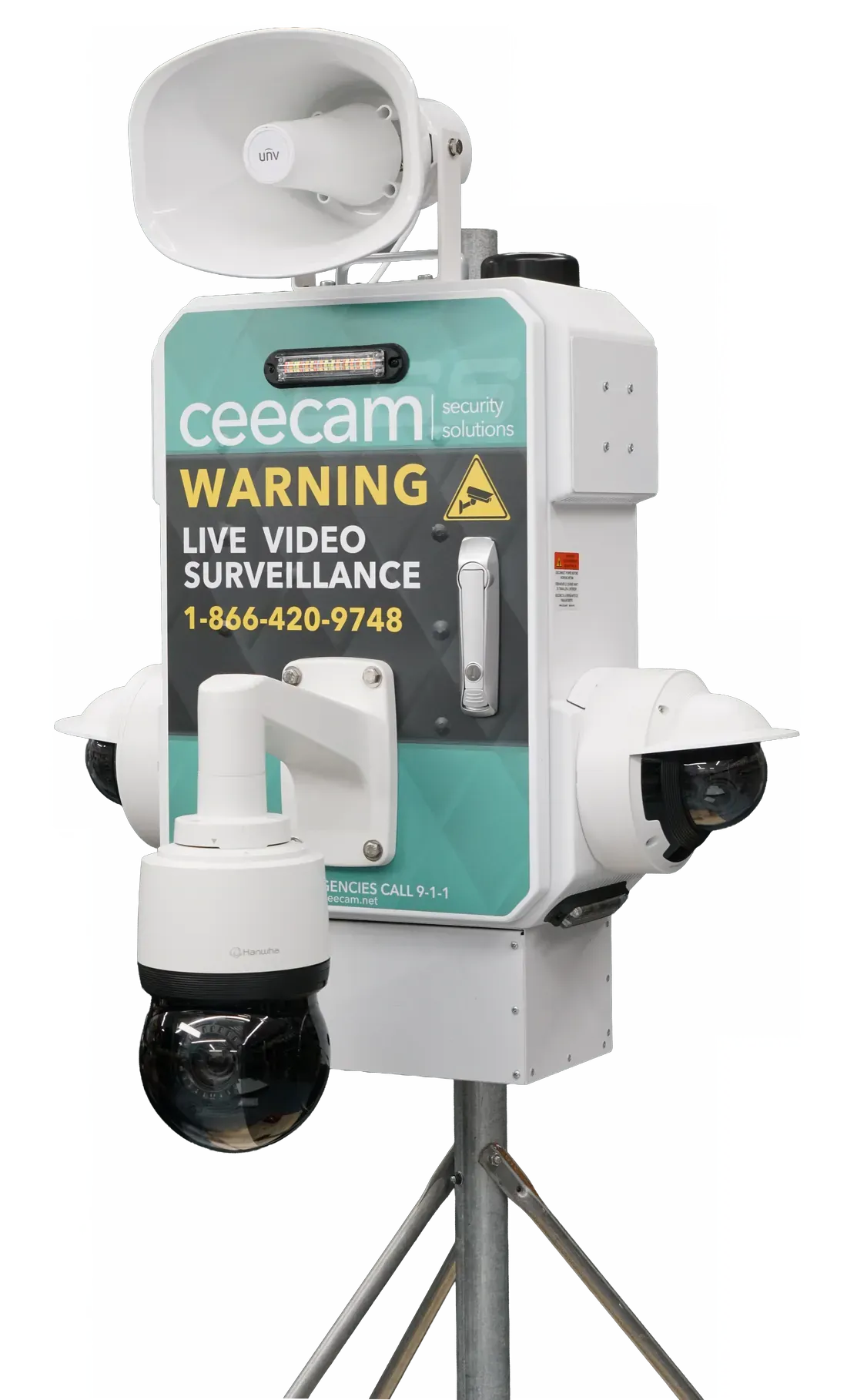
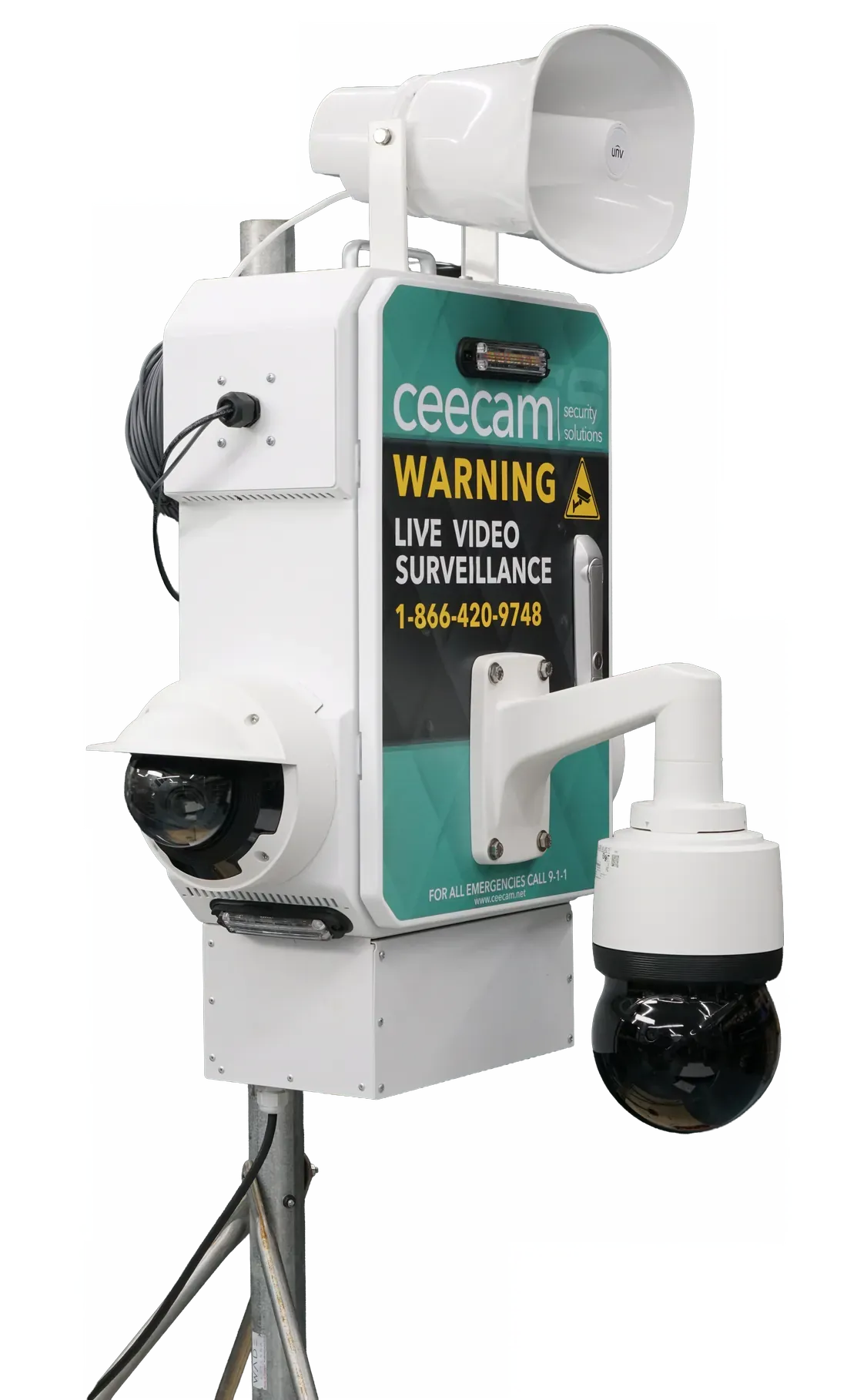
Modular construction site video security stations. Each CSS-M integrates an 8-port Power over Ethernet (PoE) camera switch, on-site video recorder, flexible connectivity, two-way audio, and LED alarm lighting in a hardened outdoor enclosure — scaled across a site with wireless CSS-E expansion units.

Typically 4 cameras per CSS-M (2 thermal + 2 visible) Integrated 8-port PoE switch + on-site recorder with 16 TB storage Two-way audio intercept and LED alarm lighting Wireless CSS-E expansion for multi-zone coverage Flexible site uplink (cellular, satellite, wireless, or wired) Battery backup and solar for off-grid sites
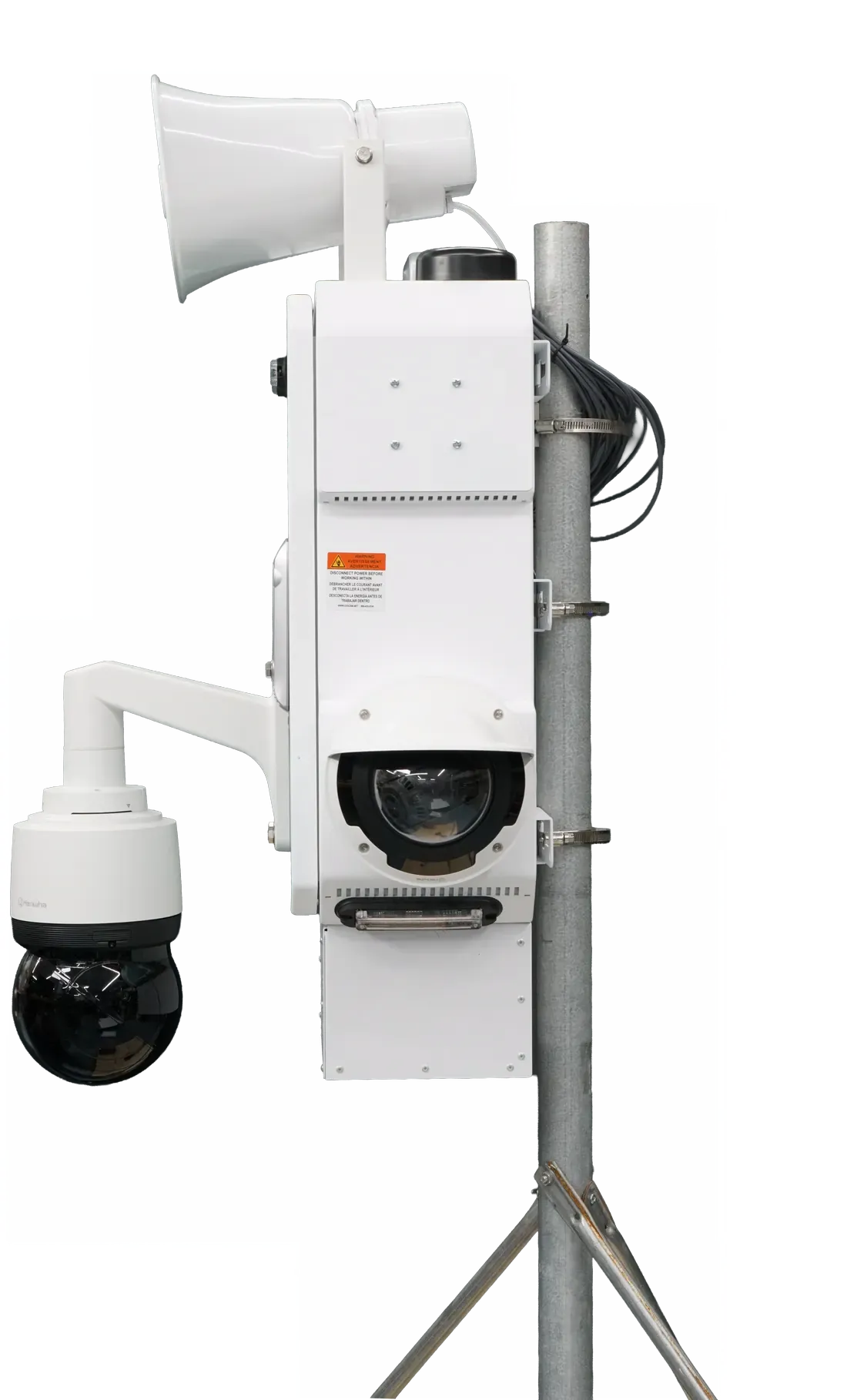
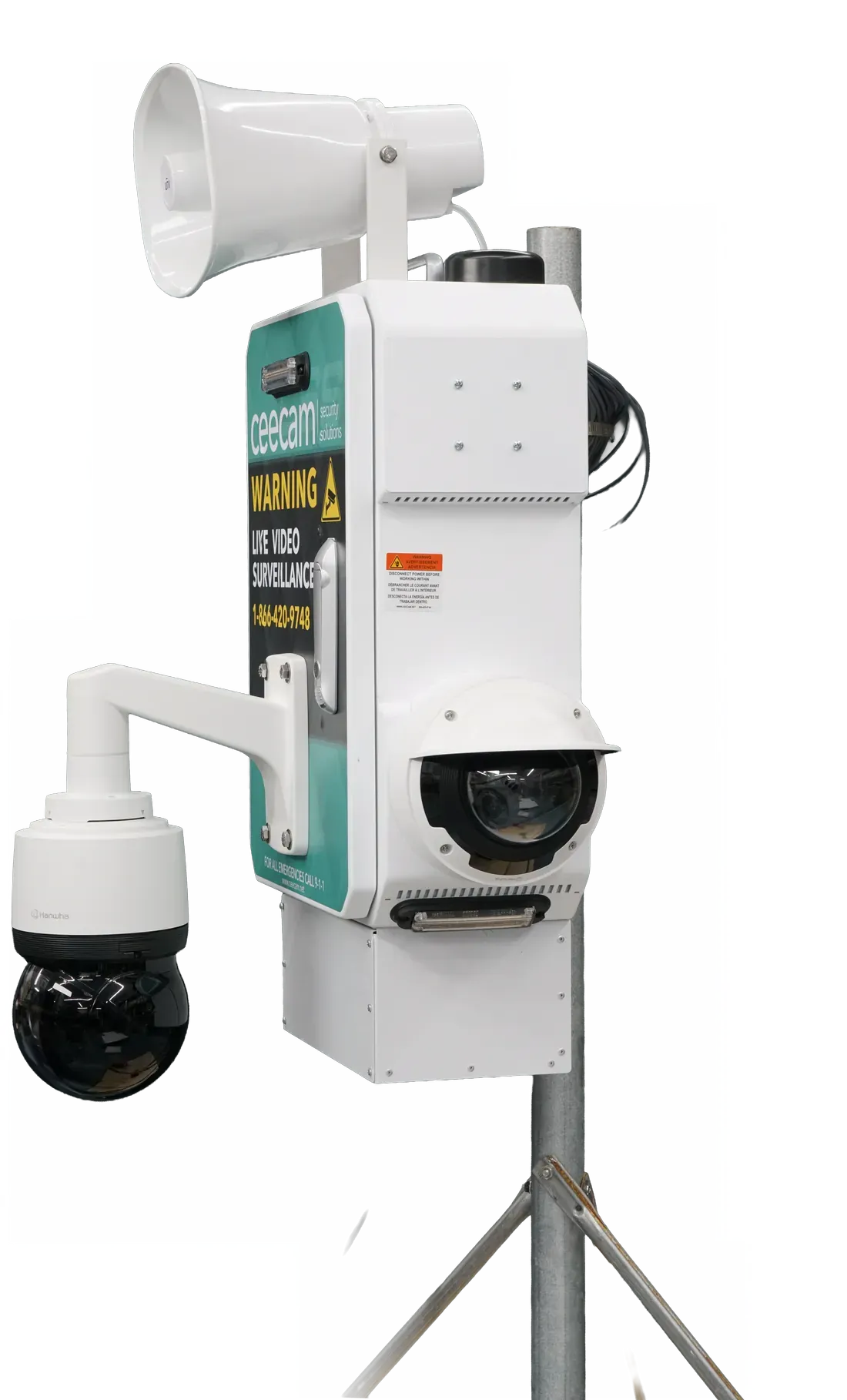
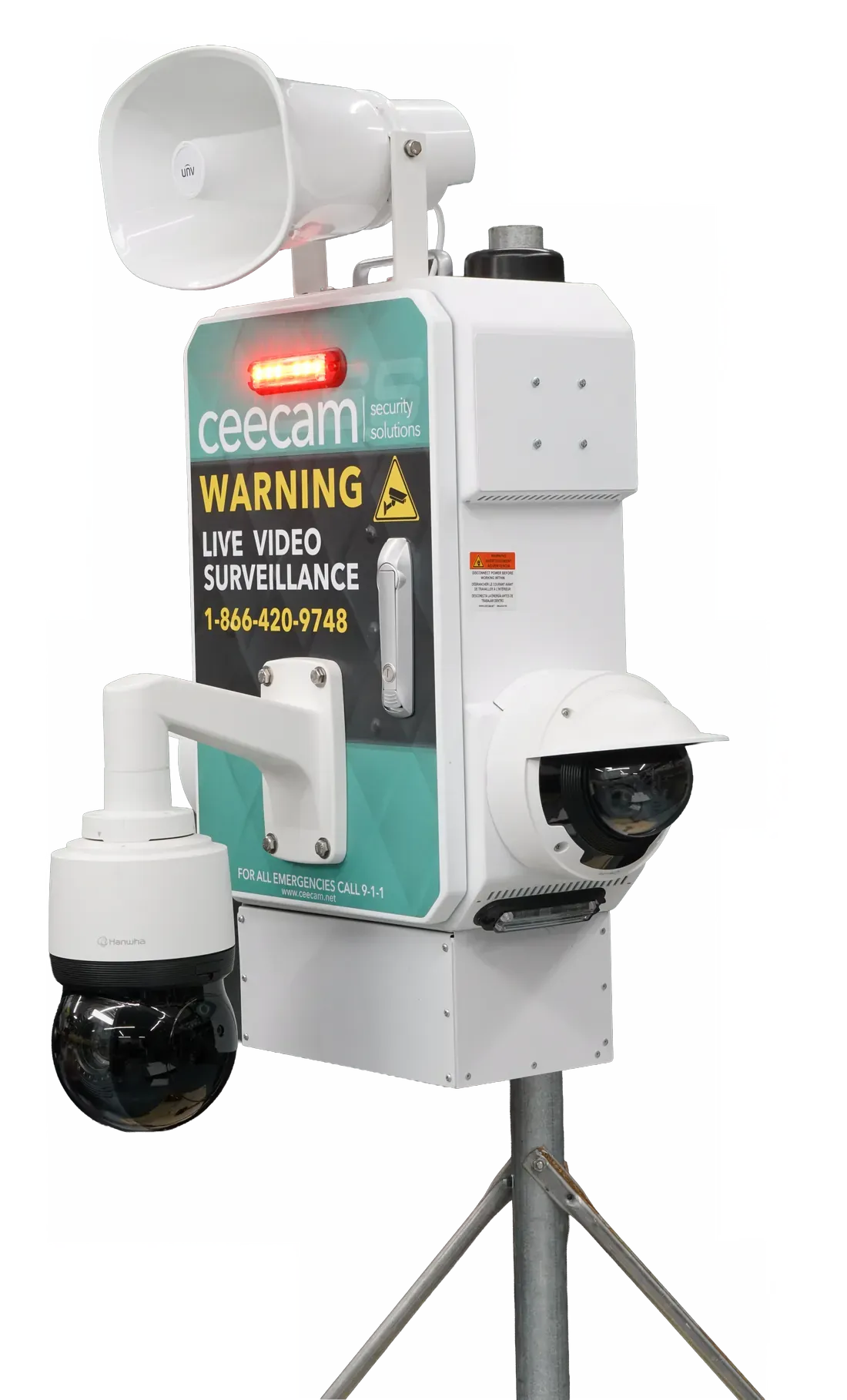
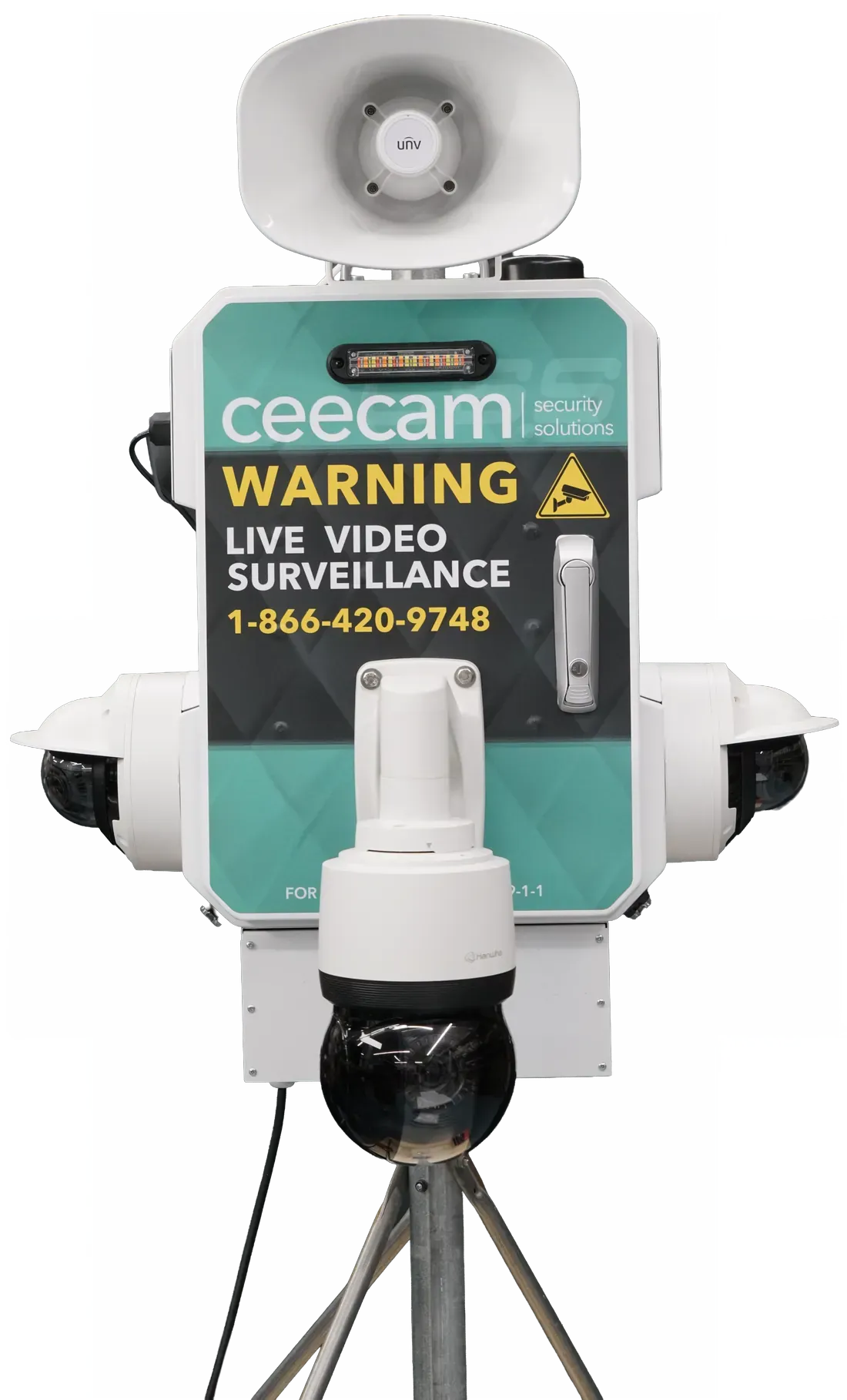
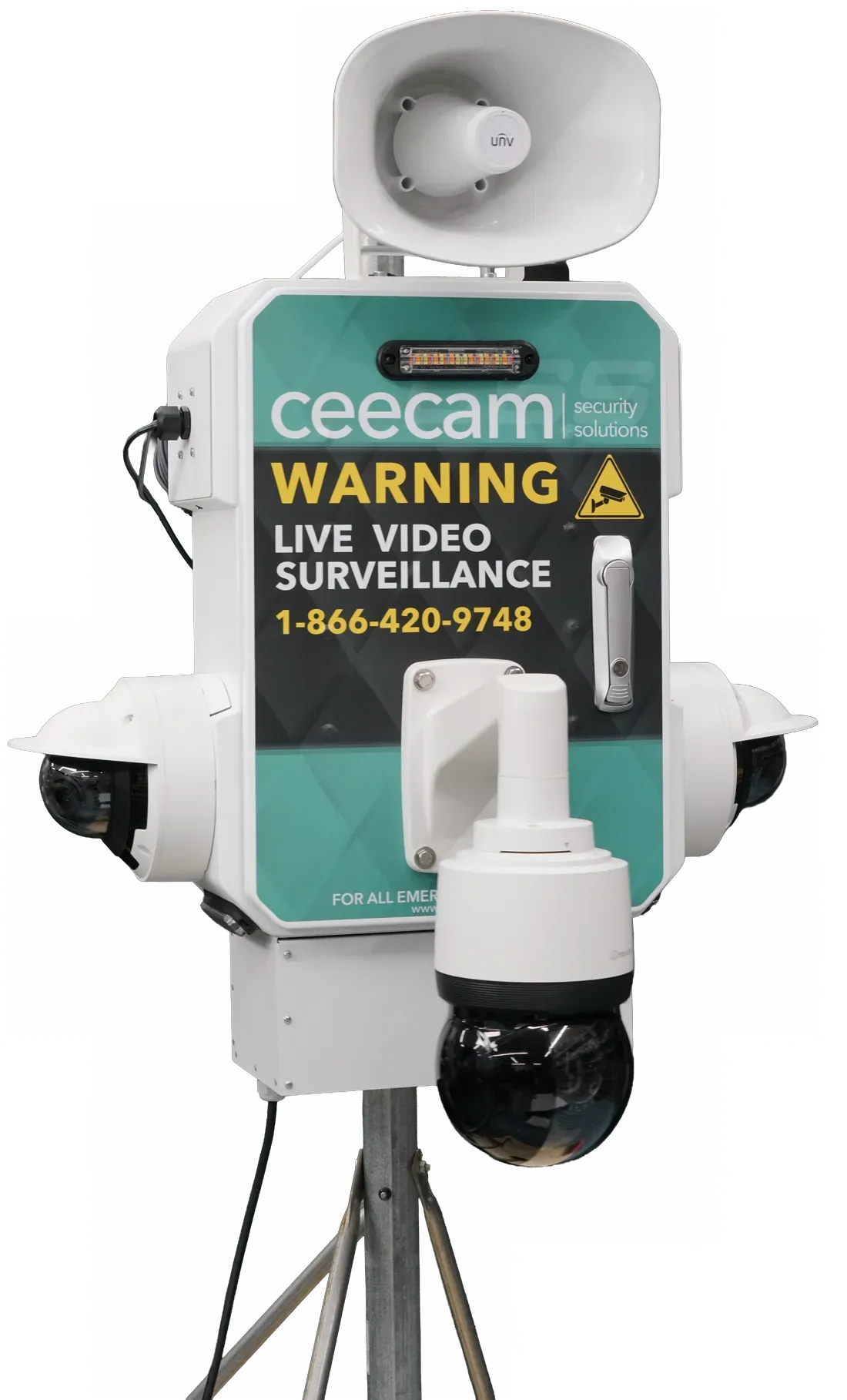
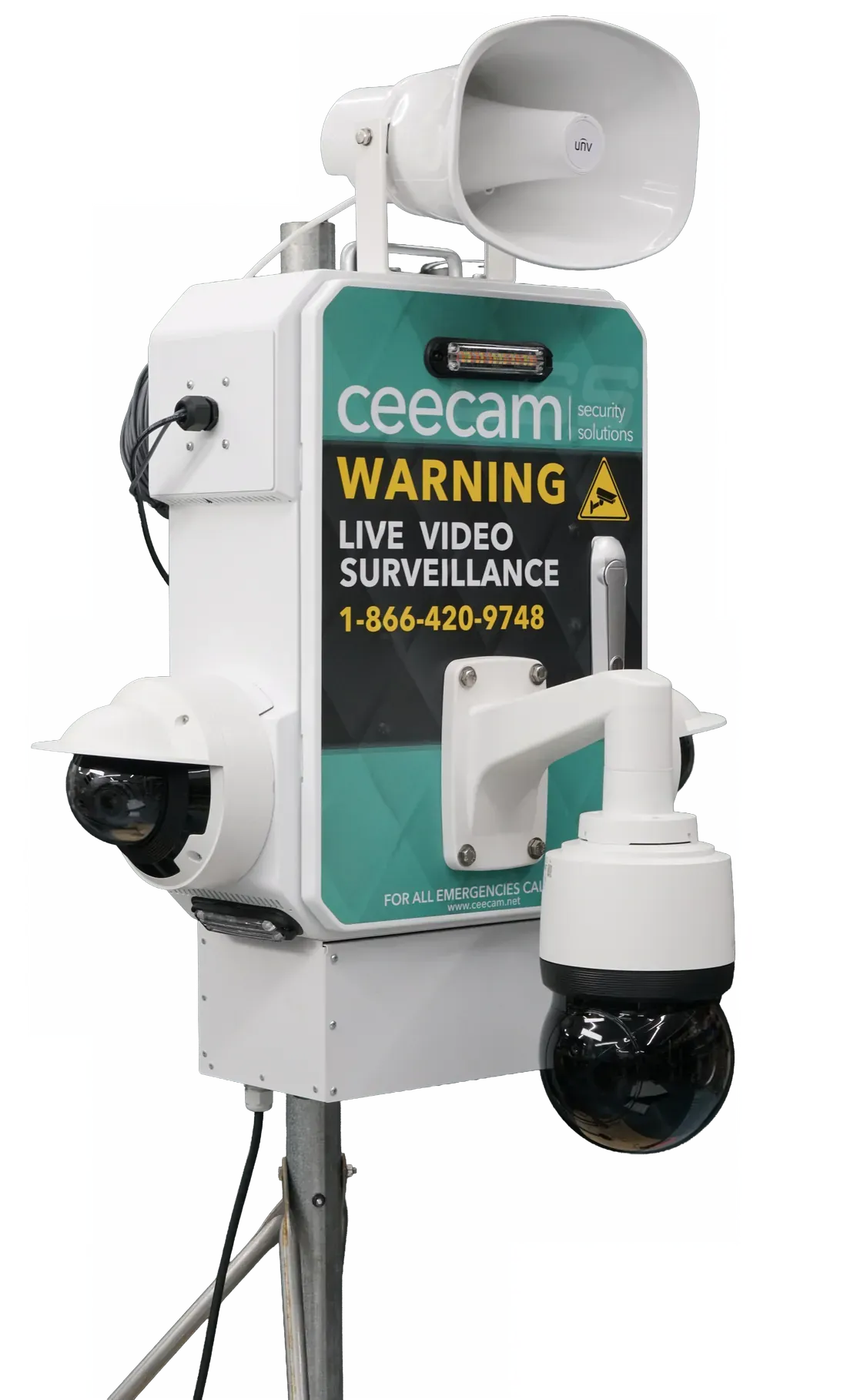
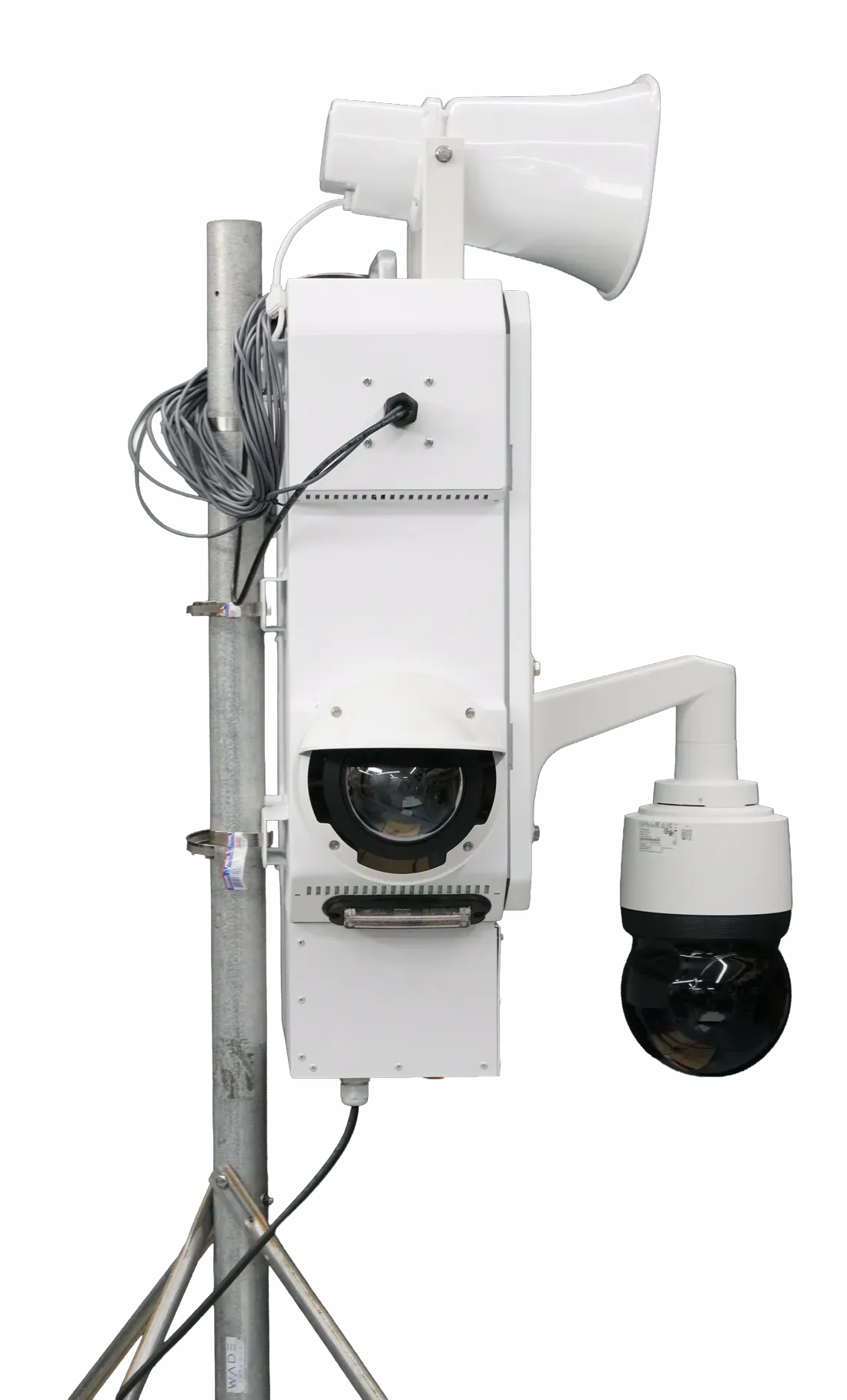
CEECAM CSS-M security station on a tripod mast: warning signage panel with LED strobe, loudspeaker above, and three pan-tilt-zoom cameras

CSS stations are deployed as part of CEECAM's managed security service with 24/7 remote monitoring. Hardware is supplied under a CEECAM service agreement — purchase, lease, or rental. Learn about the managed service

What’s in the system

CSS-M Station

Hardened all-in-one enclosure — 8-port PoE switch, on-site recorder, power, uplink, audio, LEDs

Cameras

2 thermal + 2 visible per CSS-M is standard; up to 8 PoE cameras for denser zones

Active deterrence

Two-way loudspeaker + LED alarm lighting, operator-triggered or automated

Site uplink

Cellular is the default. Satellite, point-to-point wireless, or wired where the site requires it

Power

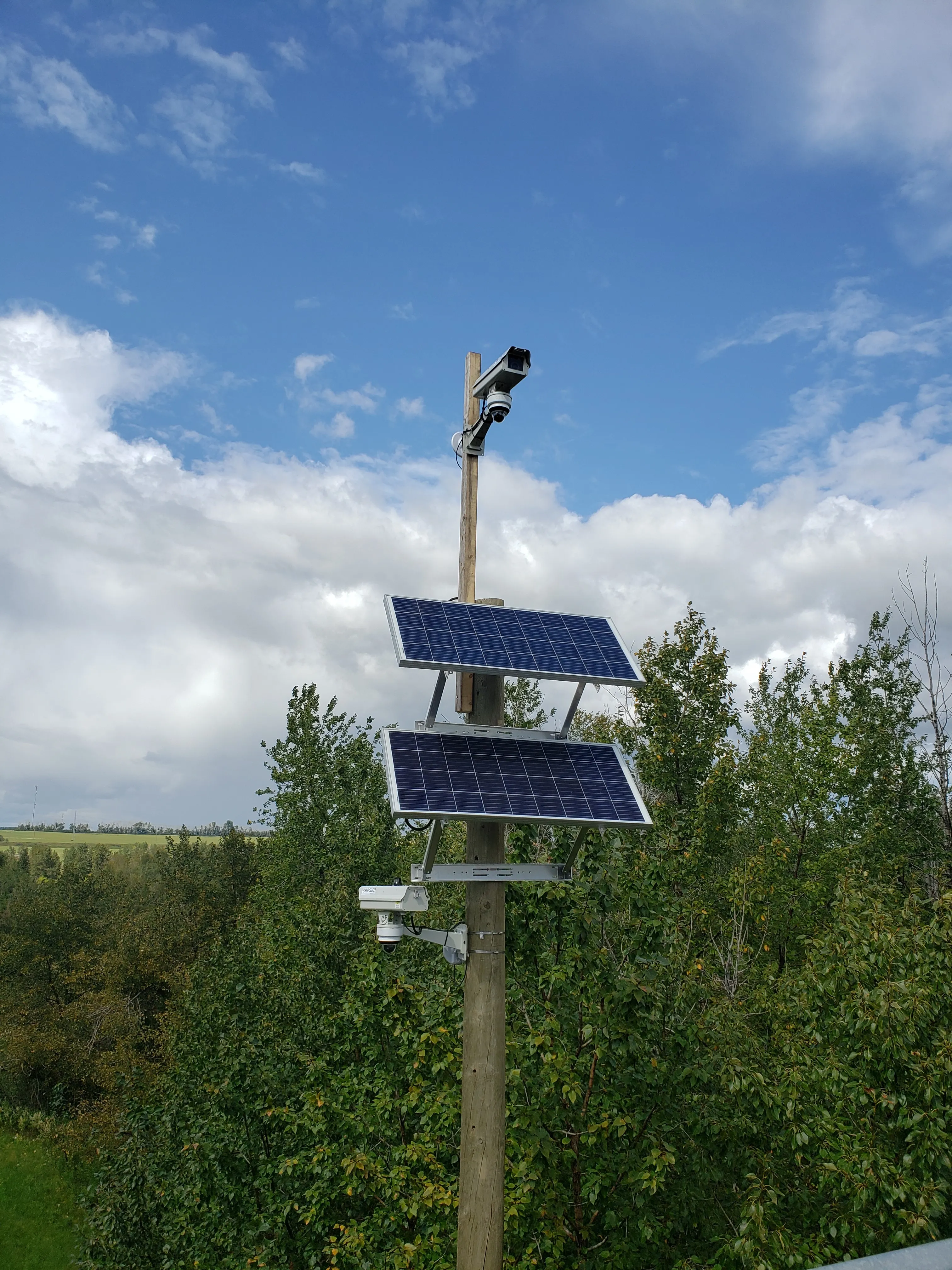
120/240V AC standard, with surge and lightning protection. Battery backup and solar for off-grid sites

Mounting

Pole, parapet, or building mount

System architecture

Main station
CSS-M

The brain. One per security zone.

Ruggedized outdoor station with integrated 8-port PoE camera switch, on-site video recorder, environmental protection, two-way audio, and LED alarm lighting. Every CSS deployment starts with at least one CSS-M.

Typical camera config
  • 2 × thermal cameras — detection in complete darkness
  • 2 × visible-light cameras — verification and evidence
  • Up to 8 PoE cameras per unit for denser zones
Active deterrence
  • Two-way loudspeaker for live operator intercept
  • LED alarm lighting with flash-pattern sequences
  • Automated pre-recorded warnings on event trigger
On-unit recording & uplink
  • 16 TB on-site recorder (NVR) — 14-day retention is standard, longer windows on request
  • Flexible site uplink — cellular, satellite, wireless, or wired
  • Video analytics — intrusion, motion, vehicle and person detection
Jobsite-hardened
  • IP56 enclosure, −40 °C to +70 °C operating range
  • Surge, lightning (40 kA max), and thermostatic heater/fan protection
  • NDAA-compliant configurations for federal and critical-infrastructure projects
Expansion
CSS-E

Extends coverage to any corner a CSS-M can't reach.

Satellite expansion unit that links back to a CSS-M over a wireless or wired connection. Adds camera and deterrence coverage to satellite poles, back-of-site gates, staging areas, and any zone outside the main station's line of sight.

Per expansion unit
  • Up to 4 additional PoE devices (cameras, sensors, or speakers)
  • 1 × LED alarm indicator for localized deterrence
  • Wireless or wired connection back to CSS-M
Power & environment
  • 120/240V AC standard, with surge protection
  • Battery backup and solar for off-grid satellite locations
Scales to site
  • Multiple CSS-E units per CSS-M for large or irregular sites
  • Rapidly redeployed as site conditions change

Typical deployments

1 × CSS-M

Small / focused site

Single station covering one entrance, materials yard, or compact zone. Typical for staging areas, small urban-infill lots, or high-value interior storage access.

2 × CSS-M (opposing corners)

Mid-size rectangular site

Two stations on opposing corners cover a reasonable-sized rectangular site end to end. Thermal cameras watch the perimeter, visible cameras verify, LED and audio deter before intrusion escalates. Most common CEECAM deployment pattern.

2 × CSS-M + N × CSS-E

Large or irregular site

Expansion units bridge coverage gaps on large, linear (highway / infrastructure), or irregular sites — back-of-site gates, satellite yards, staged phases. CSS-E nodes link wirelessly to the nearest CSS-M.

Overview

The CSS (Construction Site Security) Series is CEECAM's active-deterrence video security platform for construction sites. Unlike single-camera products, CSS is a compositional system — a CSS-M main station combined with however many CSS-E expansion units a given site requires. Cameras detect, LED alarm lighting and two-way audio deter, an on-site recorder captures all footage, and CEECAM's monitoring partners verify and dispatch. Two CSS-M stations on opposing corners is the standard deployment; CSS-E units extend it.

Scales to the site

One CSS-M for a compact lot; two on opposing corners for a typical rectangular site; CSS-M + CSS-E mesh for sprawling or irregular sites.

Detect, deter, dispatch

Thermal cameras detect motion in complete darkness. LED alarm lighting and operator-intercept audio deter on the spot. Monitoring dispatches response when deterrence isn't enough.

Construction-hardened

IP56 enclosure, lightning-protected, thermostatic heater and fan, −40 °C to +70 °C operating range. Designed for year-round outdoor deployment — not a consumer install.

Flexible uplink and power

Cellular uplink and 120/240V AC power are the standard. Satellite, point-to-point wireless, or wired uplink — and battery or solar power — are used where the site requires it.

Turn-key scope

CEECAM runs the full lifecycle — site survey, station placement, camera and expansion scoping, uplink provisioning, monitoring enrollment, configuration, and removal at project completion. The project team sees one integrated service, not a procurement list.

Frequently asked

Common questions

Answers to what estimators, engineers, and project teams ask most.

What's the difference between CSS-M and CSS-E?
CSS-M is the main station — the brain of every CSS deployment, with integrated PoE camera switch, on-site recorder, uplink, audio, and LED alarm lighting. CSS-E is an expansion unit that links back to a CSS-M to extend coverage to additional areas of the site. Every deployment starts with at least one CSS-M; CSS-E units are added as site size and complexity require.
How many cameras does a CSS-M support?
A typical CSS-M deployment runs 4 cameras — usually 2 thermal cameras for detection in darkness and 2 visible-light cameras for verification and evidence. The PoE switch supports up to 8 cameras per unit when a zone needs denser coverage.
How big a site does CSS cover?
One CSS-M covers a compact site or focused zone. Two CSS-M stations placed on opposing corners typically cover a reasonable-sized rectangular site end to end. For larger, linear, or irregular sites, CSS-E expansion units extend coverage to satellite locations. CEECAM scopes the deployment during site survey.
Is footage recorded locally or in the cloud?
Both. Each CSS-M has an on-site recorder (NVR) with 14-day retention as standard; longer windows on request. Footage is also accessible through CeePlayer for live view and remote playback by the project team.
What happens when the system detects an intrusion?
Cameras trigger CEECAM's monitoring partners. A trained operator verifies the event in real time, activates LED alarm lighting and pre-recorded warnings, and can intercept live through the two-way loudspeaker. If the subject doesn't leave, monitoring dispatches police or the designated response contact.
Does CSS work on sites without reliable internet or power?
Yes. Cellular and 120/240V AC are the defaults and cover most sites. Where a site needs more — satellite, point-to-point wireless, or wired uplink; battery backup or solar for off-grid locations — CEECAM scopes the alternative as part of the deployment.
Can CSS be purchased?
Yes. Hardware is supplied under a CEECAM service agreement — purchase, lease, or rental — and every term includes deployment and 24/7 remote monitoring. CSS is not sold as a bare hardware kit without the service.
Is CSS NDAA compliant?
CEECAM supplies NDAA-compliant camera and recorder configurations for projects with federal or critical-infrastructure procurement requirements, and confirms the bill of materials at scoping.
Can CSS integrate with Ajax alarms on the same site?
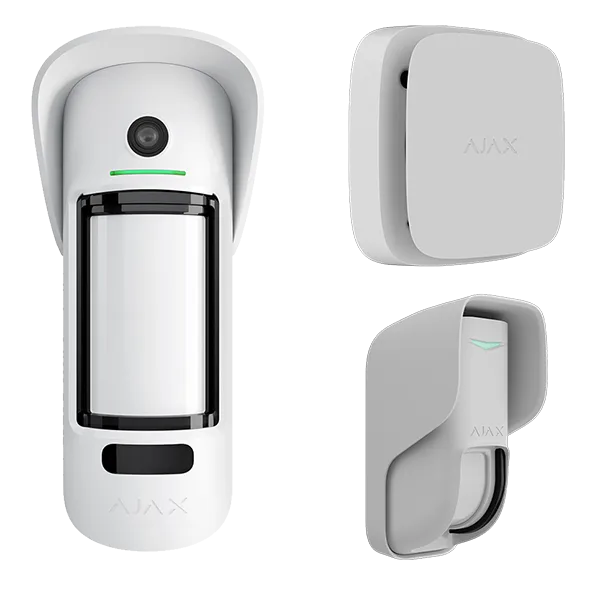
Yes. Ajax interior alarm and fire detection is designed to complement CSS perimeter video. Ajax triggers can be verified through CSS camera feeds and deterrence can be activated via the monitoring operator.

Ready to put CEECAM on your next project?

We’ll scope the right system combination for your job site.